
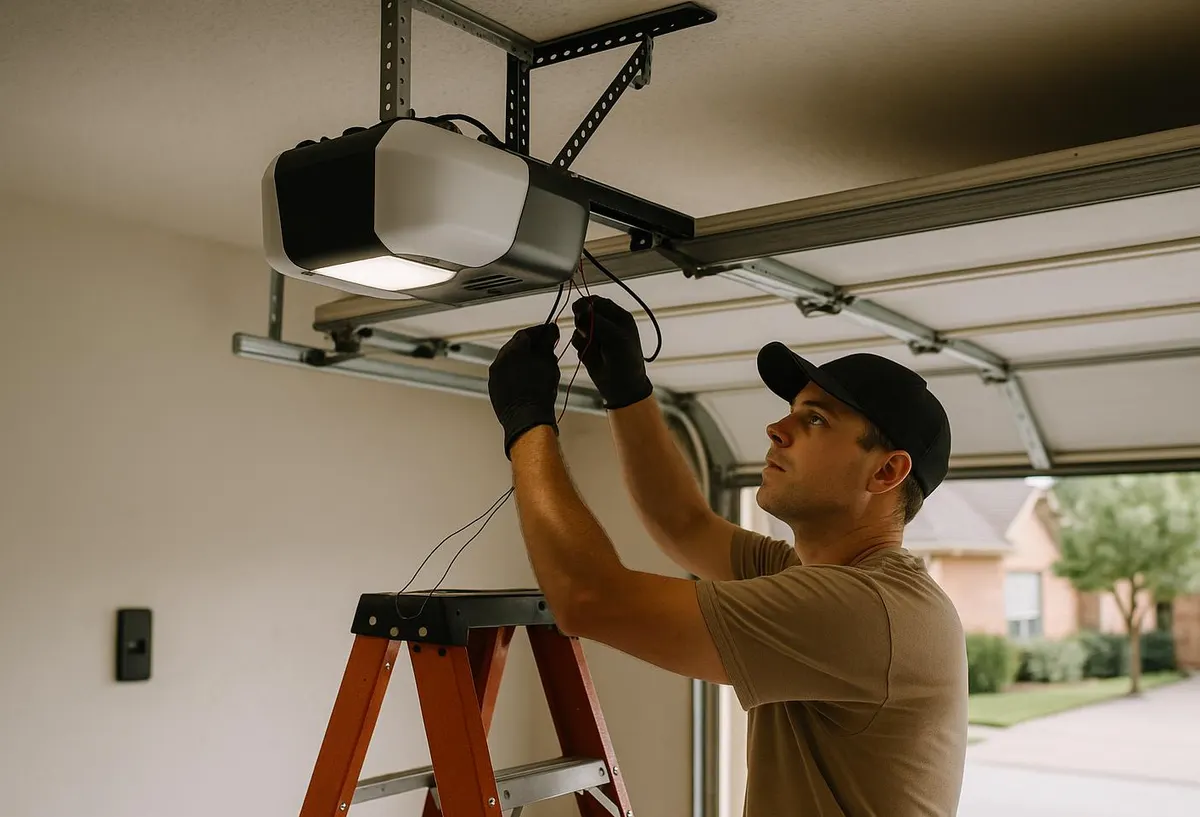
What a Noisy Opener Costs You If You Wait
A rattling, grinding, or banging garage door opener isn't just annoying — it's a warning. Left alone through another stretch of Florida humidity and afternoon storms, loose hardware works itself looser, dry rollers wear grooves into track, and a strained motor gear can fail outright. The timing matters here: we're still inside hurricane season, and a garage door is one of the largest moving parts on your home. If the opener seizes up or the door binds on its track during a storm, you're stuck manually wrestling a door that's supposed to help you secure the house fast. Fixing the noise now is cheaper and a lot less stressful than replacing a stripped opener or a jammed door later.
What That Noise Is Telling You
- Metallic grinding or rumbling: usually worn rollers or a chain/belt that's lost tension.
- Rattling along the whole garage: loose mounting bolts, a loose opener bracket, or hardware that's backed out from vibration.
- Squealing: dry hinges, rollers, or a dry opener rail.
- Banging at the top or bottom of travel: worn springs or a door that's slightly off balance — this one leans toward a technician call.
- Humming with no movement: motor or capacitor issue, not a DIY fix.
Humidity plays a bigger role here than people expect. Moisture swells wooden panels and door jambs, which changes how the door sits in the track and creates friction noise that wasn't there a few months ago. Afternoon downpours also drive moisture into hardware, and that moisture plus metal equals rust over time, even well inland.
Step-by-Step: From Cheap Fixes to a Full Belt-Drive Swap
Tools You'll Need
- Socket wrench set
- Garage door lubricant (silicone or lithium-based — not WD-40, which attracts dust)
- Replacement nylon rollers (if needed)
- Adjustable pliers
- Rubber isolation pads or an opener vibration-dampening kit
- Ladder
1. Tighten Every Bolt You Can Reach
Start with the track brackets, the opener's mounting bracket, and the hardware holding the rail to the ceiling. Humidity cycles cause expansion and contraction that slowly backs out screws. A pass with a socket wrench often knocks out half the rattle on its own.
2. Lubricate the Moving Parts
Hinges, rollers, the opener's drive rail, and the torsion spring (a light coat, not a soak) all benefit from lubricant twice a year. Skip this step and you'll hear it within weeks as the squeal comes back, especially after a few humid days.
3. Replace Worn or Cracked Rollers
Pull one roller at a time, check for flat spots, cracking, or metal-on-metal wear, and swap in nylon replacements. Nylon rollers run quieter than steel and hold up better against moisture-related corrosion. This is a reasonable weekend project if you're comfortable with a ladder and pliers.
4. Check Chain or Belt Tension
A sagging chain or belt knocks against the rail with every cycle. Most openers have a tensioner nut you can adjust — follow the manufacturer's gap spec, usually found on a sticker near the motor unit. Over-tightening strains the motor, so don't guess.
5. Isolate the Motor Unit
Rubber isolation pads between the opener bracket and the ceiling joist absorb vibration before it travels through your rafters and into the house. This is a cheap fix that makes a bigger difference than most homeowners expect.
6. Consider a Belt-Drive Swap
If you've done all of the above and the opener is still loud, the chain-drive mechanism itself may simply be reaching the end of its useful, quiet life. A belt-drive opener runs noticeably quieter because it uses a reinforced rubber belt instead of a metal chain. This isn't a DIY swap — it involves disconnecting the old unit, matching the new opener's horsepower and travel limits to your door's weight, and setting force and limit settings correctly so the door doesn't stress the springs or cables on a wind-rated door.
Where the Line Is: DIY vs. Technician
Tightening bolts, lubricating parts, swapping rollers, and adding isolation pads are all reasonable homeowner tasks with basic tools. Anything involving the torsion spring, the opener's internal gears, chain/belt tension beyond a simple adjustment, or a full opener replacement should go to a technician. Springs are under heavy tension and doors built to meet wind-load requirements need correct calibration after any opener change — get it wrong and you risk a door that won't hold against storm winds when it matters.
When to Call Astor Overhead Door Co
If you've worked through the cheap fixes and the noise, binding, or banging is still there, it's time for a second set of eyes. Our Garage Door Maintenance & Tune-Up service covers a full inspection of rollers, hinges, hardware, and spring balance, catching the rust or wear that moisture tends to hide. If your opener is past saving, our Garage Door Opener Installation service includes properly sizing and setting up a quieter belt-drive unit matched to your door's weight and wind rating.
If your garage door in Astor, DeLand, Eustis, Tavares, Umatilla, Altoona, Sorrento, or DeLeon Springs is making more noise than it used to, give Astor Overhead Door Co a call before the next round of storms puts it to the test.