
The Morning the Door Won't Cooperate
You hit the opener button on a chilly November morning and the door hesitates, then lurches up an inch at a time, grinding the whole way. Or it doesn't move at all, and the opener motor just hums and strains before the safety reversal kicks in. Sometimes the bottom of the door looks like it's glued to the slab, and you have to give it a shove before it releases. None of this is your imagination, and none of it means you need a whole new door. Cold mornings in Astor are rare compared to points north, but when a front does push temperatures down overnight, the swing from humid Florida air to a cold slab creates exactly the conditions that make garage doors act up.
What You're Actually Seeing
- The door sticks at the bottom and needs extra force to break free, almost like it's been sealed to the concrete.
- The opener strains, reverses, or trips the safety sensors partway through the cycle instead of running smoothly.
- The door moves in jerks rather than one smooth motion, often with a grinding or squealing sound from the tracks.
- The remote or wall button seems slow to respond, or the door only moves a few inches before stopping.
- One side of the door looks like it's lagging behind the other, so the door appears to be racking slightly as it travels.
Pay attention to which of these you're seeing, because it points to a different cause and a different fix.
Cause #1: The Bottom Seal Is Bonded to the Slab
This is the first thing worth ruling out, and it's surprisingly common here. Garage slabs hold onto evening moisture, and on a cold, clear night that moisture can condense right where the rubber weather seal meets the concrete. If that seal is older, cracked, or has lost its flexibility from months of sun exposure, it can bond lightly to the slab overnight. The fix for the moment is simple: never force the opener against resistance like this, since that's how you strip gears or burn out a motor. Instead, manually release the door (the red pull cord) and gently pry the seal free by hand. The longer-term fix is replacing a worn bottom seal with one rated for this climate, since the same UV and heat that dries out rubber in summer leaves it brittle and more prone to sticking when a cold morning finally arrives.
Cause #2: Thickened Lubricant and Grime in the Track
Grease and lubricant behave differently as temperatures drop. Older or lower-grade lubricant on the rollers and tracks can thicken and get tacky, especially if it's mixed with months of dust, pollen, and the fine grit that blows in during Florida's dry spells. A technician checks the tracks next because this is an easy, inexpensive fix: clean out the old buildup and reapply a silicone-based garage door lubricant to the rollers, hinges, and tracks. Avoid household oils or WD-40 as a long-term fix. They displace water in the moment but don't hold up in humid conditions and can attract more dust.
Cause #3: Spring Tension Shifting with Temperature
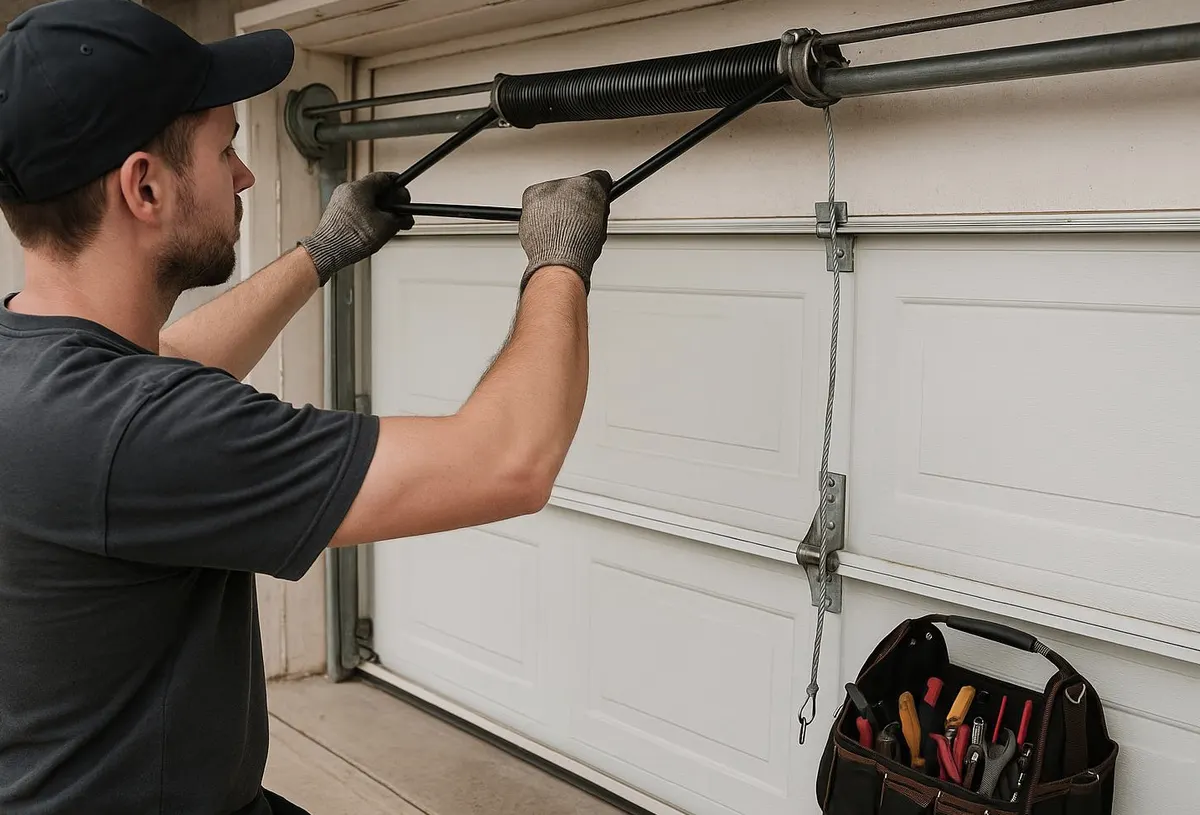
Metal contracts slightly in cooler temperatures, and torsion springs are no exception. A door that was perfectly balanced in October can feel noticeably heavier on a cold snap morning because the spring is marginally tighter and the opener has to work harder to compensate. This is where a professional check matters, because adjusting spring tension involves releasing stored energy under real force. A technician will run a balance test, disconnect the opener, and see how the door holds position halfway up on its own. If it drifts down or shoots up, the spring tension needs adjusting, not just the opener settings.
Cause #4: Opener Sensors and Force Settings
If the door is making it partway up and then reversing, the photo-eye safety sensors near the bottom of the track are worth a look. Overnight condensation can leave a light film on the sensor lenses, and the opener reads that as an obstruction. Wiping both sensor eyes with a dry cloth and making sure they're still aimed directly at each other solves this more often than people expect. If that doesn't fix it, the opener's force and limit settings may need recalibrating, since a door that's moving slightly heavier because of the spring tension above can trip force settings that were fine all summer.
Cause #5: Rust on Hinges and Rollers
Last on the list, but worth checking if the door has been stiff for more than a single morning: the same humidity that makes Florida air feel heavy also speeds up rust formation on hinges, roller shafts, and springs, especially after a stretch of afternoon downpours followed by a cool, damp night. A light surface rust can make hardware bind and squeal even after lubrication. At that point the fix isn't more oil, it's replacing the corroded hinges or rollers before they wear a groove into the track or crack under stress.
When to Call Astor Overhead Door Co
If the door is sticking at the seal, you can usually handle that yourself. But if you're hearing grinding, seeing the door move unevenly, or the opener is straining and reversing, it's worth having it looked at before a spring or roller fails completely. Our Garage Door Maintenance & Tune-Up service covers exactly this: checking spring balance, lubricating hardware, cleaning and aligning sensors, and catching rust or wear before it becomes a breakdown. If the issue turns out to be spring tension itself, our Garage Door Spring Repair team handles that safely, since springs under tension aren't a DIY repair.
If your garage door is sticking, groaning, or hesitating this season, give Astor Overhead Door Co a call. We serve Astor, DeLand, Eustis, Tavares, Umatilla, Altoona, Sorrento, and DeLeon Springs, and we'd rather fix a small issue now than an emergency call later.